The issue preventing users from signing into Savvas has been resolved. If you are still experiencing issues with accessing Savvas, please submit a technology ticket. Thank you.
P-CCS Tech Status Savvas Login Issue
Savvas is experiencing an issue that prevents users from signing into the platform. We are working closely with them to resolve this issue as soon as possible. We will provide an update once access is restored.
Missing Apps? Your P-CCS Google “Waffle” Apps Aren’t Gone
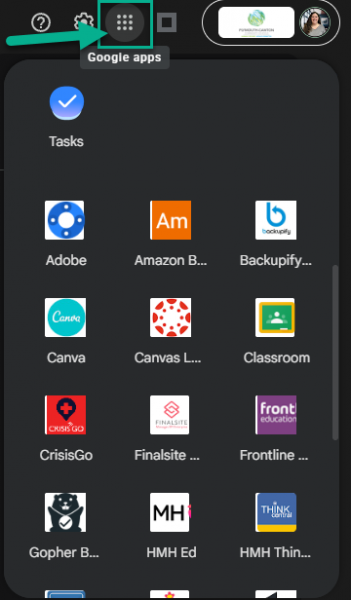
Google is often updating and changing their platform and many people have noticed that the “waffle” on www.google.com or a new tab no longer displays your P-CCS apps. Rest assured, the apps are not gone, they just have to be accessed in a slightly different way.
Here are 2 easy ways to access the P-CCS “waffle” apps:
- P-CCS Bookmarks: In the top-left of your Chrome browser, click the P-CCS Bookmarks folder, and select Google Workspace Dashboard.
- Inside an active Google App: Open Gmail, Google Drive, or Google Calendar. The waffle icon in the upper-right corner inside these apps will contain all of our standard P-CCS “waffle” apps.
Supercharge Your Lesson With Edpuzzle!

We all know that video is a powerful ways to engage students. Many of you have used video in your classroom, but are perhaps wondering how can you ensure students are actually watching, check for understanding in the moment, and stop them from just hitting “play” and tuning out?
If that sounds familiar, I’m excited to re-introduce you to Edpuzzle! It’s a tool designed from the ground up to turn passive video viewing into an active, engaging, and accountable learning experience.
What is Edpuzzle?
It’s a platform that lets you take almost any video (from YouTube, Khan Academy, one you’ve made, or even a screencast you record right in Edpuzzle) and embed your own questions, notes, and voice-overs directly into it.
But it’s not just for videos anymore! You can now build lessons with interactive Slides (by uploading your Google Slides or PowerPoints), create stand-alone, gamified Quizzes to check understanding, or create a Doc that allows you to chunk information and ask different types of questions, all on the same platform. Check out the What’s new at Edpuzzle Video for more details!
Did you know? Edpuzzle has an official partnership with YouTube to provide ad-free videos when using their platform.
Why Try Edpuzzle?
This is where Edpuzzle really shines as a Canvas Studio alternative. It’s not just about showing a video; it’s about what your students do with it.
- 1. Turns Passive Viewing into Active Learning: Embedded questions make students stop and think, which boosts retention.
- Student Outcome: Deeper engagement and accountability. Students must participate, not just watch.
- 2. Get Instant, Actionable Data: Simple analytics show who completed the lesson, their scores, and which questions were toughest.
- Student Outcome: This formative data shows exactly what to re-teach or which students need support.
- 3. Perfect Your Flipped Classroom: Deliver instruction via homework with built-in checks for understanding, so you know who is ready for the next step.
- Student Outcome: Frees up class time for hands-on activities, projects, and small-group support.
- 4. Access a Massive Content Library: Save time by adapting lessons or using the high-quality, standards-aligned Edpuzzle Originals library.
- Student Outcome: Students get vetted, engaging, pre-built content.
How to Get Started
Check out our Edpuzzle guide for how access your premium account.
The Ticketing Advantage
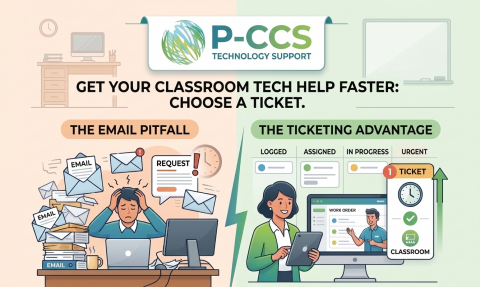
Our technology team is working hard behind the scenes to keep everything running smoothly. With a high volume of requests coming in right now, our top priority remains getting your classroom tech back on track as quickly and efficiently as possible.
To help us serve you faster, please submit all tech issues through our ticketing system instead of sending direct emails.
When requests are sent via email, they run the risk of getting buried in a crowded inbox. Submitting a ticket ensures your request is logged instantly, assigned to the right team member, and prioritized—especially for urgent classroom needs.
Submitting a request takes just a minute. Here is how to do it:
- Access the Portal: Open your browser, click on the P-CCS Bookmarks folder, and select Work Order Request. Sign in using Google SSO.
- You can also access the portal directly at mi50.mlworkorders.com or helpdesk.pccsk12.com
- Describe the Issue: Provide a brief summary of what is going wrong or what assistance you need.
- Attach Visuals: Whenever possible, include a screenshot or photo of any error messages. Seeing the exact error helps us diagnose and fix the problem much faster.
Using the ticketing system guarantees nothing slips through the cracks and keeps our entire support process transparent and efficient. Thank you so much for your patience, partnership, and support as we work together to keep our school tech running seamlessly!
Prepping Your Canvas Course for the New School Year
Your Canvas courses should be visible and ready for action. Canvas is designed to simplify your teaching journey and provide you with a user-friendly platform to engage with your students, organize course materials, and foster a dynamic learning environment.
Course Template
To assist you in creating an engaging and effective online learning space, we’ve prepared comprehensive resources for the course template. These resources include step-by-step guides, video tutorials, and best practices for setting up your Canvas courses. Whether you’re a seasoned Canvas user or a first-timer, these tools will ensure that you’re making the most of Canvas’s features. Using the Canvas template ensure students and families have a more consistent experience in Canvas.
Locating Courses from Past Years
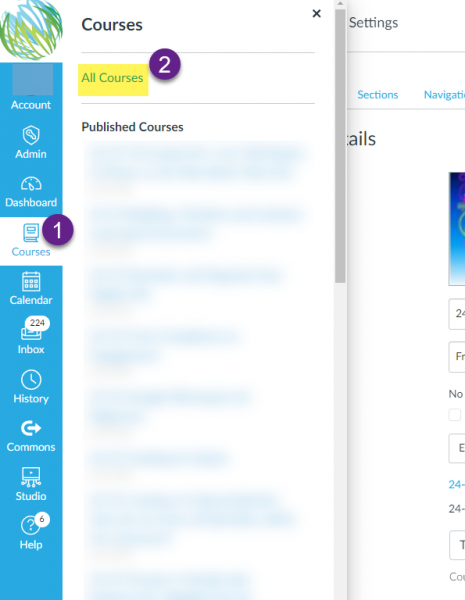
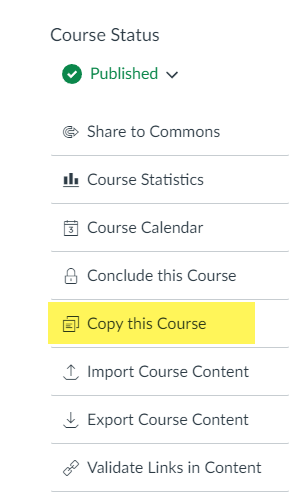
Looking for courses from previous years? Rest assured, they may not be on your dashboard, but they are still there. If you navigate to https://pccsk12.instructure.com/courses and scroll to the bottom of the page, you’ll see such courses under “Past Enrollments.” Past enrollments (such courses) are in read-only format. If you would like to make some edits and updates to your course(s) for current or future usage do the following. Click on the course under Past Enrollments, go to Settings on the Course Navigation Menu and click the “Copy this Course” button.
Import Previous Content
You can easily copy previous Canvas courses into your 26-27 course shell. However, if you have been keeping the same content from year to year, some unused content might be slowing you down. Below, you will find steps to import Canvas content into your new course shell (once generated automatically through the MiStar integration).
Getting Started with Canvas
Just getting started with Canvas or wanting to start anew? Check out this Canvas Quick Start Guide. It has links to crosslisting directions, template homepage information, button templates, and more!
Crosslisting Guide
When you have taken time to update the homepage and import previous content, you might not want to repeat those steps for multiple sections on the same course. If that is the case, take a look at the crosslisting guide. This will allow you to only update one course and the changes will be reflected in all sections.
Publish Your Course(s)
You must publish your course in order for it to be visible for students and families. Rest assured, students cannot view course content until the term starts (check this under the course settings). Avoid unnecessary emails from students and families and set yourself a reminder to publish!
If you need assistance with any of these steps, please submit a tech ticket.
Technology Essentials: Streamline Your Workflow
As your new Educational Technology Manager, I am thrilled to dive in and support our incredible district team. Whether you are stepping into a P-CCS building for day one or year twenty, technology should streamline your workflow, not complicate it. While our P-CCS Technology Essentials guide is often shared during new hire onboarding, it serves as a valuable annual cheat sheet for every staff member to keep systems running smoothly.
Chrome Navigation Reminders
- Make sure you are signed into the Chrome browser with your P-CCS Google ID
-
- On your computer, open Chrome.
- At the top right, select Profile
Add Chrome profile
.
- If you choose to sign in to Chrome with your Google Account, your profile name will automatically be your Account name.
- Choose a name, photo, and color scheme.

If you choose to sign in to Chrome with your Google Account in this new profile, you’ll be able to save your bookmarks, passwords, and other settings in your account and access them on your other devices where you’re signed in.
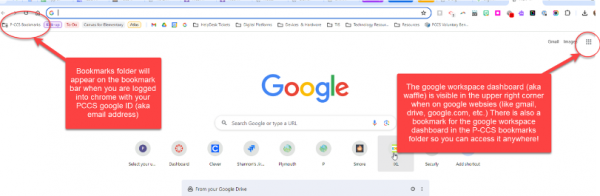
- P-CCS Bookmarks appear on the Bookmark Bar when logged into Chrome with your P-CCS Google ID.
- The Google Waffle is visible when on google websites (gmail, drive, docs, ect.). It can also be found in the P-CCS Bookmarks folder under Google Workspace.
SMARTboard Updates & Tips
Check out the Smart Learning Academy to level up your knowledge of your SMARTboard and Lumio. The Academy is filled with short self-paced courses that walk you through using various tools and let you interact with a SMARTboard simulation from anywhere.
Tips
- Use the Lock Canvas button when using the Whiteboard
 . This makes it so the background won’t automatically get moved when content and annotations are added.
 - Want to write with 2 different colors? Enable finger inking while using the Whiteboard. Select 1 color for the pen and 1 for finger inking.

Technology Support
How do I get help?
- Submit a work order to get support with malfunctioning or broken technology and get questions answered on how to use district resources.
- Master Library is the work order system for technology, facilities, & operations. Access it via the P-CCS bookmarks folder. Sign in with your District Google ID.
Summer Scams Educators Should Watch For

Summer break is supposed to be for rest, travel, family time, and maybe finally cleaning out that one closet you have been ignoring since October. But while educators may slow down a little, scammers do not.
In fact, summer can be prime time for scams. People are booking trips, signing kids up for camps, and shopping online. Add in a little urgency, like a “limited-time offer,” and a fake logo that looks official, and it is easy to see how even the most careful person can get caught off guard.
Here are a few summer scams to keep on your radar.
Fake Travel Deals
Summer travel deals are everywhere. Unfortunately, so are fake ones. Scammers may create look-alike websites for hotels, airlines, rental homes, or travel agencies. They may also post vacation rentals that do not exist or offer prices that seem just a little too good to be true.
And you know the rule. If it seems too good to be true, it probably is.
Before booking, go directly to the official website instead of clicking through an ad or email. Check reviews from multiple sources and look closely at the URL. In addition, avoid paying with wire transfers, gift cards, cryptocurrency, or payment apps when possible. A credit card usually offers better protection if something goes wrong.
Camp and Childcare Scams
Parents and educators are often looking for summer camps, tutoring or childcare. Scammers know this and may create fake programs, fake registration forms, or fake scholarship offers.
These scams can be especially tricky because they often look helpful. They may promise a last-minute opening, a discounted rate, or a special program for students. But their real goal is to collect payment or personal information.
Before signing up, verify the organization. Search for the program separately, call a known phone number, and be cautious of forms asking for unnecessary information. A real summer camp probably needs emergency contact information. It does not need your Social Security number.
QR Code Scams
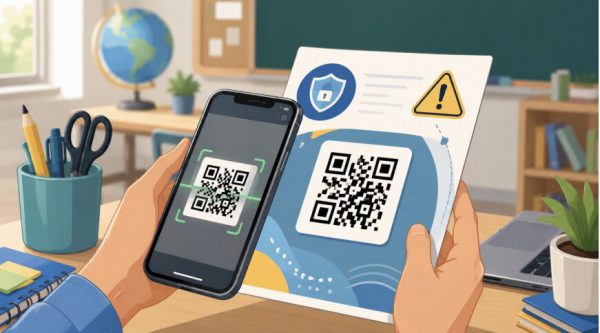
QR codes are convenient. They are also easy for scammers to abuse. A scammer can place a fake QR code on a flyer, parking notice, package, email, or sign. When someone scans it, the code may lead to a fake website designed to steal login credentials or payment information.
For educators, this is especially important because QR codes are common in schools. We use them for newsletters, events, surveys, classroom stations, and professional learning. That means it is worth slowing down before scanning unfamiliar codes.
A good habit is to preview the link before opening it. If the URL looks odd, shortened, misspelled, or unrelated to the organization, do not continue. When in doubt, go directly to the official website.
Fake Package Delivery Messages
Summer often means more online shopping. Maybe it is classroom supplies, vacation gear, or a package you forgot you ordered. Scammers take advantage of this by sending fake delivery texts or emails claiming there is a problem with your package.
The message may say you need to confirm your address, pay a small fee, or reschedule delivery. The link may look official, but it can lead to a phishing site.
Instead of clicking the link, go directly to the retailer or delivery company’s website. Use the tracking number from your original order confirmation. Remember, a real delivery service should not need your bank login to drop off a package of markers.
School Impersonation Scams
Even during the summer, school business continues. Administrators may receive messages about invoices, software renewals, conference registrations, or supplies. Instructional coaches and teachers may see emails that look like they came from a district leader or trusted vendor.
Scammers often use urgency to get people to act quickly. For example, they might say the following:
- Please handle this today.
- I’m in a meeting.
- Can you buy gift cards?
- Your account will be closed.
Pause before responding. Verify requests through a second method, especially if money, gift cards, account access, or student information is involved. A quick phone call or separate email can prevent a much bigger problem later. Learn how to protect yourself and our district from email scams.
Social Media and Marketplace Scams
Summer is also a popular time to buy and sell items online. Educators may be looking for classroom furniture, books, or supplies. Scammers may post fake listings, ask for deposits, or send fake payment confirmations.
Be cautious with sellers who pressure you to act quickly or ask for unusual payment methods. If you are buying items for your classroom, make sure the product is real, the seller has a history, and the payment method offers some protection.
Websites That Can Help You Check for Scams
There are a few helpful websites you can use when something feels suspicious. They are not perfect, and they cannot catch every scam, but they can give you another way to pause and verify.
- VirusTotal can scan suspicious URLs and files. If you receive a strange link or download, this tool can help you check it before opening it.
- BBB Scam Tracker lets you search scam reports from other people. This can be useful when you are checking an unfamiliar company, travel deal, online shop, summer program, or marketplace seller.
- The Federal Trade Commission’s Consumer Advice site offers clear guidance on common scams, phishing, fake invoices, imposter scams, and what to do if you shared information by mistake.
The key thing to remember is that these tools are helpful, but they are not magic wands. A scam may be too new to show up yet. When in doubt, slow down, go directly to the official website, and verify the request another way.
A Simple Summer Scam Check
Before clicking, paying, scanning, or sharing information, ask yourself:
- Was I expecting this message, package, invoice, or invitation?
- Does the sender’s email address or phone number look right?
- Is the message creating urgency or fear?
- Is the payment method unusual?
- Can I verify this another way?
Those five questions can save a lot of trouble.
What to Do If Something Feels Off
If you think you clicked a suspicious link, entered information on a fake site, or responded to a scam message, act quickly.
Change your password for that account. If you use the same password elsewhere, change it there too. Turn on multi-factor authentication when available. Contact your bank or credit card company if payment information was shared. And if the scam involves school accounts, devices, or student information, report it to our district right away.
There is no shame in reporting it. Scammers are good at what they do, and reporting helps protect others.
Enjoy the Break, But Stay Alert
Summer should be a time to recharge. You do not need to become a full-time scam detective, but a few smart habits can go a long way. Slow down, verify before clicking, and trust your intuition if something feels weird.
this article first appeared in https://blog.tcea.org/summer-scams-tips-educators/
2026 End of School Year Technology To-Do List
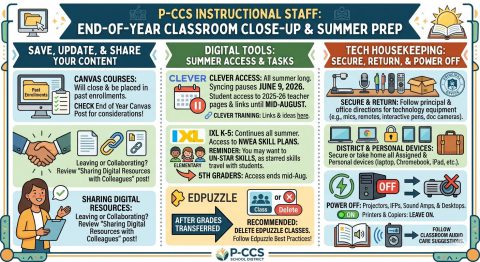
As instructional staff make plans to close up your classrooms for the summer (and enjoy a well deserved break), please take care of the following items as needed
-
Save, Update, and Share Your Content
- Current Canvas courses will close and get placed in your past enrollments. However, there are considerations to check in the End of Year Canvas Post.
- If you are leaving the district or hoping to collaborate with colleagues over the summer you might review this post: Sharing Digital Resources with Colleagues – P-CCSK12 Tech
- Clever: Staff and Students will have access to all Clever resources throughout the summer. Clever syncing will be on pause starting on Tuesday June 9, 2026 giving student’s access to their 2025-26 teacher’s pages and links until around mid-August when syncing will resume for the 26-27 school year. If you’re interested in learning how to make the most of Clever in your classroom, consider looking at training and ideas here.
- IXL: PCCS’s digital subscription for K-5 elementary students will continue throughout the summer. Students will have access to their NWEA skill plans (which were just updated with any spring scores) all summer. Students will have access to any current teacher starred skills through around mid-August, you might consider un-starring skills for students because they travel with students from year to year. Students in 5th grade currently will lose access around mid-August when syncing begins for the 2026-27 school year as they will then be recognized as 6th graders.
- Edpuzzle: AFTER your grades have been transferred to the gradebook, it’s recommended that teachers delete their Edpuzzle classes. Issues can sometimes arise when Canvas courses that were integrated with Edpuzzle are copied from one year to the next. It is recommended that teachers delete their Edpuzzle classes before the new school year starts and new students join your classes. Please follow the directions in Edpuzzle’s Best Practices: Closing Out the School Year.
-
Tech Housekeeping: Secure, Return, and Power Off (typically around the last day of school)
- Please comply with the directions of your principal and main office to turn in or secure all classroom technology equipment such as document cameras, microphones, interactive pens, and remotes.
- Please also secure or take home all District-assigned devices (laptop, Chromebook, iPad, etc.), as well as all personally-owned devices.
- Power off projectors/IFPs, sound amps, and desktop computers.
- You may leave printer and copiers plugged in and powered on
- Follow the care suggestions for classroom audio.
The Latest NotebookLM Updates for Teachers

If you haven’t explored Google’s NotebookLM yet, you’re missing out on one of the most powerful lesson-planning assistants available. Unlike generic AI chatbots that pull from the entire internet, NotebookLM is a “walled garden.” It only knows what you teach it. You upload your PDFs, YouTube links, Google Docs, and websites, and it becomes an instant expert on your specific curriculum.
🚨 Important Note: K-12 students do not currently have access to NotebookLM. Because students cannot log in to use the tool themselves, you should think of NotebookLM as your personal, teacher-only productivity lounge. It’s here to cut your prep time in half and help you generate incredible materials to share with your class.
Here is a look at the newest features recently rolled out.
- Editable Slide Decks: You can now generate full presentations based on your uploaded sources and actually revise them. Just type a simple prompt to tweak the text, visuals, or layout until it’s perfect. You can even export them as PPTX files to use in Google Slides!
- 10 New Infographic Styles: Transform dry text into engaging visual aids. You can now choose from predefined styles like Sketch Note, Bento Grid, Clay, or Scientific to perfectly match your lesson’s vibe.
- Gemini App Integration: Your notebooks are now linked with the Gemini app. You can create new notebooks on the spot or turn your Gemini chats into NotebookLM sources for existing projects.
How K-12 Teachers Can Use It Today
Since your students can’t log in directly, your goal is to use NotebookLM as a creation engine. Here are four ways to use it this week:
The “Bus Ride” Hook (Audio Overviews)
Upload a dense reading passage or a historical document and click Audio Overview. NotebookLM will generate a realistic, 10-minute podcast where two AI hosts banter about the topic. Download the audio file and post it in Canvas. Students can listen to the “podcast” on the bus or walking the dog to prep for your class discussion!
The Ultimate Lesson Planning Hub
Upload your standards, short readings, and the transcript of your favorite educational YouTube video. Go to the chat and ask: “Based strictly on these sources, create a 3-day lesson plan including a kinesthetic activity and a formative assessment.”
Instant Differentiated Study Guides & Flashcards
Click on the Study Guide or Flashcards buttons in the Studio panel. NotebookLM will auto-generate glossaries, key questions, and vocabulary cards complete with citations pointing right back to your text. Export these resources and print them or share them directly with your students.
Visual Aids on Demand
Struggling to explain a complex scientific process or a timeline of historical events? Use the Infographic tool in the Studio. Choose the “Instructional” or “Sketch Note” style, let the AI visualize your uploaded text, and drop the finished graphic into your next slide deck.
NotebookLM takes the heavy lifting out of synthesizing materials and creating resources. Spend less time formatting slides and study guides, and more time doing what you do best: connecting with your students!
Looking for more? Check out Matt Miller’s cheat sheet and blog post to see more examples.